
- Home
- Costs
- Heating cost
Pool Heating Cost Calculator
Three answers compare the cost of one warm-up with a heat pump and with gas.
1 of 3: your gallons
Your heating cost appears here.
- 18.16¢
- US average home power per kWh
- 5x
- heat a heat pump gives per unit of power
- 82%
- gas heater efficiency used
This pool heating cost calculator works out what a single warm-up costs you, whether you heat with a heat pump or a gas heater. Just plug in your pool's gallons and the number of degrees you want the water to rise.
Here are the numbers behind the math:
- What you pay for power: 18.16 cents for each kWh, the US average from the EIA
- Heat pump: delivers 5 units of heat on each unit of power it draws
- Gas heater: 82% of the fuel it burns becomes heat
- Warming a single gallon by 1 degree F calls for 8.34 BTU
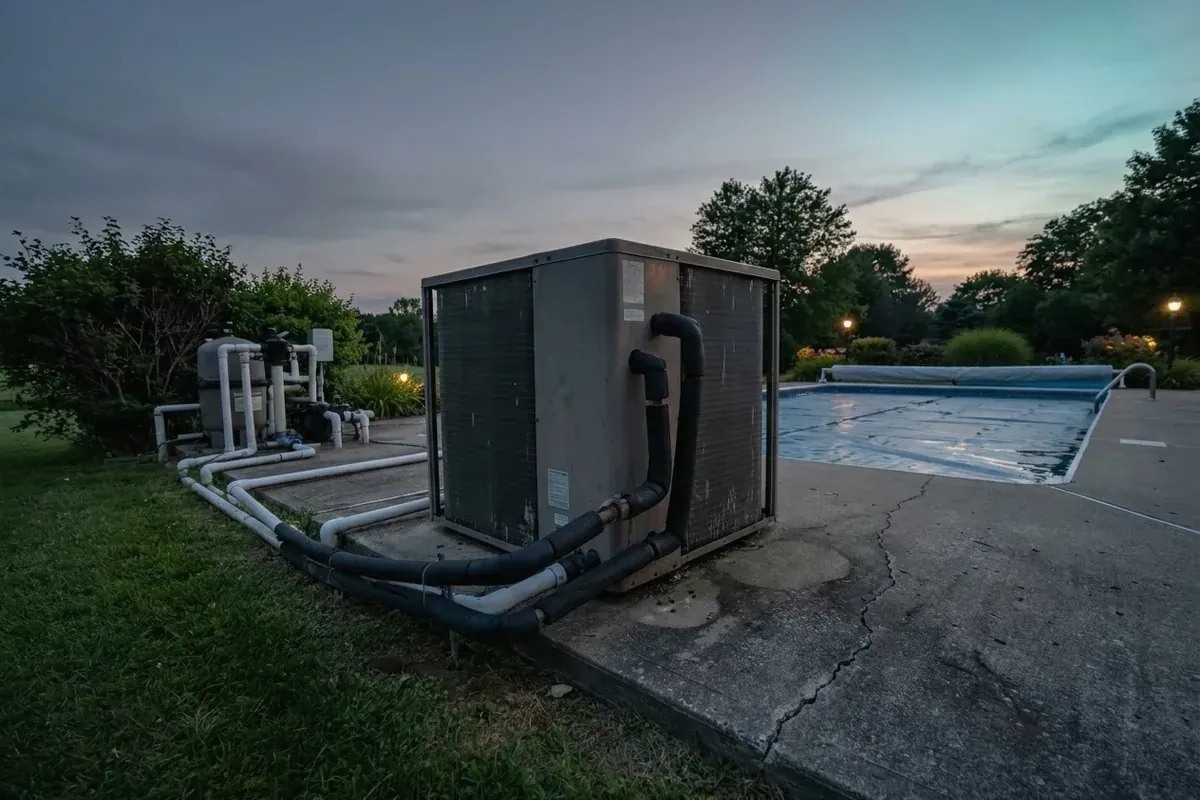
What does it cost to heat a pool?
Your biggest expense is that first warm-up. Once the water is warm, holding it there comes down to wind, shade, and whether the pool gets covered.
A BTU is just a measure of heat. It takes 8.34 BTU to lift one gallon of water by 1 degree F, which is why a large pool or a big temperature jump drives up the price. Start with your gallons, since every other number flows from them.
Not sure how many gallons you have? These common pool sizes suppose the water averages 4.5 ft deep:
| Dimensions | Volume (gal) |
|---|---|
| 12 x 24 ft | roughly 9,690 |
| 16 x 32 ft | roughly 17,200 |
| 20 x 40 ft | roughly 26,900 |
A heat pump runs on electricity and pulls heat into the water. For every unit of power it draws, it delivers 5 units of heat, and that's why it usually costs less to run than a fuel-burning heater. A gas heater sends 82% of the gas it burns into the water as heat, and the rest goes to waste.
Electricity is priced at 18.16 cents per kWh, the US average reported by the EIA. Gas prices come from the EIA gas price table. Your rates might not match these, so check your bill for what you pay per unit of power or gas.
Trim the cost
A few small habits bring the bill down, and there's a reason each one works:
- Put a cover on the pool each night, so the heat you already paid for doesn't escape.
- Only heat during the weeks you'll actually swim, so you don't warm water that sits untouched.
- Drop the temperature setting by a few degrees. Every extra degree costs more to reach, so trimming a little saves you money.
Pump running cost
Heating and pumping are two different costs. A standard single-speed pump pulls roughly 1,725 watts, so running it 8 hours burns through about 13.8 kWh each day. To get the daily cost, multiply those kWh by 18.16 cents for each kWh.
When it's hot out or the pool got heavy use, add 1 to 2 hours of running time, which nudges that figure up slightly.